Trust Me, I'm Lying.
Exploring The Voices That Twist Reality In Fiction!

Picture this: you’re thoroughly immersed in a novel, having faith in your storyteller, when BAM! Everything is a lie, your favorite character is not the dreamy, brooding character you adored, and turns out to be nothing like you imagined. Was the narrator spinning tales, bending truths, or completely lost in delusion all along, and did you just get hoodwinked by a fictional character? Welcome to the wild world of unreliable narrators.
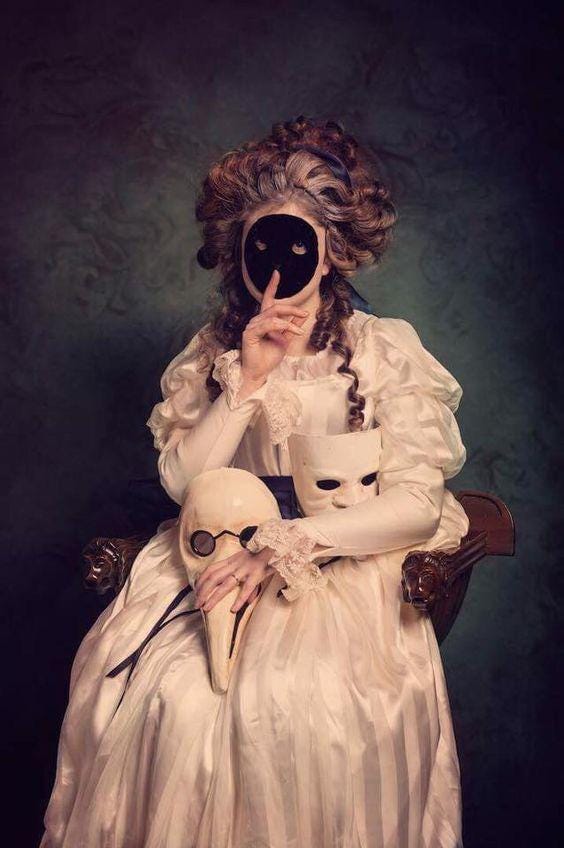
These characters are literature’s con artists, dreamers, and deluded minds. They pull us in with charm, confusion, or chaos and then flip the script. But here’s the real twist: their unreliability isn’t just a clever plot device. It’s a fascinating glimpse into human psychology.
The narrator has been weaving a web of deceit, lost in delusion, or trapped in the labyrinth of their memory. What compels these narrators to distort the truth? And do they even realize it when they do? Most importantly, what happens to us when the trusted narrative shatters, leaving only fragments behind? This puzzle captivates readers, drawing us deeper into layers of fiction and psychology.
Let’s explore the minds of unreliable narrators, from those who lie with intent to those who are simply confused, and see why we enjoy being misled in stories.
What Is an Unreliable Narrator?
The term “unreliable narrator” was coined by literary critic Wayne C. Booth in The Rhetoric of Fiction (1961). It describes a narrator whose credibility is compromised, whether due to intentional deceit, limited knowledge, mental illness, personal bias, or naïveté.
Why We Can’t Always Trust Who’s Telling the Tale
What if the person telling a story doesn’t know what they’re talking about, or worse, knows exactly what they’re doing but doesn’t want you to know? That’s the magnetic power of the unreliable narrator, one of literature’s most psychologically rich devices. These narrators lie, misinterpret, mislead, or simply lack insight, but we follow them anyway, often with trust until cracks appear.
Unreliable narration mirrors how real people perceive the world: flawed, biased, and emotionally driven. Those distortions can shape relationships, decisions, and judgments, both in fiction and real life.
Here’s how some of the most beloved (and deceptively charming) narrators show the psychology behind their storytelling.
The Many Faces of the Unreliable Narrator
The Naively Confident Narrator : Emma by Jane Austen
Emma Woodhouse is clever, wealthy, and beautiful, but delightfully mistaken about almost everything. She fancies herself a master matchmaker, narrating her own story with full confidence while stumbling over the hidden truths in others’ hearts and her own.
Emma embodies confirmation bias, convinced she knows best and filters reality to fit her beliefs. Austen lets readers slip into Emma’s shoes, sharing both her missteps and her eventual dawning of insight.
The Emotionally Unstable Narrator : The Bell Jar by Sylvia Plath
Esther Greenwood’s deepening depression colors her perception of reality. Her narration is fragmented and detached, reflecting a mind in crisis.
This is an example of cognitive distortion: mental patterns that make situations seem worse than they are. Esther’s unreliability isn’t deliberate; it’s shaped by depression, anxiety, and a fractured sense of self. Readers are immersed in a world that feels increasingly unstable, not because of lies, but because of a mind breaking under pressure.
Multiple Narrators with Competing Truths : Game of Thrones by George R.R. Martin
Martin rotates third-person limited perspectives, giving each character a biased, partial view of events. Tyrion Lannister’s wit hides deeper pain; Catelyn Stark’s loyalty obscures her prejudices; Theon Greyjoy’s desperation warps his self-image.
Psychologically, this illustrates perspective bias and cognitive dissonance. Each narrator believes their truth, but no one has the full picture. Readers must juggle conflicting accounts much like real-life situations with multiple eyewitnesses.
“Also, when you play the game of thrones, you win or you die.”
The Perspective-Limited Narrator : The Hunger Games by Suzanne Collins
Katniss Everdeen narrates in first person, but her perspective is limited by trauma, fear, and survival instincts. She often withholds information, sometimes intentionally, sometimes unconsciously.
Katniss’s narration shows trauma-induced memory gaps and selective attention, focusing on immediate threats over broader truths. Her story is deeply personal, yet incomplete, leaving readers to question her motives and the bigger picture.
We’ve explored how narrators can be unreliable in subtle ways: through naivety, bias, limited knowledge, or the distortions of trauma. These flaws invite readers to question what is true and what is filtered through the narrator’s mind. But unreliability doesn’t always operate quietly or gently. Sometimes, it’s fueled by something far more intense, something that consumes the narrator entirely: obsession.
When a narrator becomes consumed by desire, envy, or a single all-encompassing goal, their perception of the world begins to twist in ways that feel deeply personal. Every thought, memory, and interaction is colored by that fixation. Small details are magnified, innocuous events are misinterpreted, and reality itself bends to fit the narrator’s desires or fears. In these cases, the narrative no longer merely tells a story; it reflects the inner compulsions of the mind, revealing how powerful and all-consuming obsession can be.
As readers, we can’t help but be drawn into this distorted perspective. We feel their longing, their fear, their twisted justifications, even if we recoil from the consequences. Obsession doesn’t just tint a story; it reshapes it, blurring the line between truth and desire, sanity and delusion. And it’s through this lens that some of the most compelling and unsettling narratives unfold.
Have you ever wondered why we’re drawn to characters who are both fascinating and horrifying?
One of the most extreme and chilling examples is Patrick Bateman from American Psycho by Bret Easton Ellis. Bateman isn’t just defined by his desire for perfection, status, and control; he is devoured by these thoughts. Every interaction, every fleeting moment, is filtered through his twisted cravings, creating a world that feels both familiar and terrifyingly distorted. We’re never quite sure what’s real and what exists only in his deranged imagination.
His obsession doesn’t stop at wealth or dominance. It spills into unspeakable violence, turning the narrative into a blur of fantasy and reality. Experiencing the story through Bateman’s eyes forces us to navigate a world where morality, empathy, and truth are entirely subjective. It’s horrifying, yes, but also strangely compelling. Bateman shows us how obsession can reshape not just a mind, but the very story it tells.
Obsession doesn’t always whisper; it also screams. It doesn't only take psychological forms; it can manifest in physical horror as well. In horror, fixation isn’t about love or jealousy; it’s an all-consuming drive for chaos, fear, or control. When we watch a story unfold through such a lens, we feel it too: the unpredictability, the dread, the sense that nothing and no one is safe.
Take Terrifier (2016). Art the Clown embodies obsession in its most terrifying form. His fixation isn’t on status or affection; it’s about terror and domination. Every action is filtered through his relentless drive, turning what should be a simple night out into a nightmare. Unlike narrators who manipulate through words, Art shows that obsession can warp a narrative through sheer action alone, leaving us unsettled, riveted, and afraid.
Across literature and film, characters consumed by obsession show us how fragile perception can be. What makes these narratives so compelling is that we recognize a part of ourselves in them. Desire, envy, and fixation exist in all of us. These stories remind us that perspective is never purely objective, that reality can be bent by what we crave most, and that the line between fascination and horror is often very thin.
In the end, obsession doesn’t just tell a story. It becomes the story—and we’re left both engrossed and unnerved by the shivers it leaves behind.
Why Do We Believe Them Anyway? (and then don’t)
Why do readers trust unreliable narrators at first? Humans are wired for storytelling. We instinctively search for coherence and honesty in narratives.
First-person narration creates empathy and the illusion of transparency, the sense that we can fully understand another’s thoughts and feelings. When the illusion breaks, we question not only the narrator but ourselves. What assumptions did we make? What did we ignore? What did we want to believe?
From Fiction to Real Life: When Narratives Become Evidence
Unreliable narration has real-world parallels: Eyewitnesses misremember events. Defendants minimize actions. Victims recount trauma in fragments. Police reports reflect personal biases.
In both fiction and life, stories shape our understanding, but they are not the same as objective truth. Literature is living proof of how convincing a lie can be, especially when the narrator believes it.
Why It Matters?
Unreliable narrators remind us that truth is rarely objective. It’s shaped by memory, bias, emotion, and survival instincts. Literature gives us a safe space to explore these psychological complexities. By reading critically, we learn to recognize subtle distortions in both fictional and real narratives.
And perhaps the greatest distortion of all: the most unreliable narrators might not live in novels, but they possibly might live in our heads.
References:
https://muse.jhu.edu/pub/30/oa_monograph/book/27983/pdf
https://ryanholiday.net/trust-me-im-lying-confessions-of-a-media-manipulator/
Writer : Arunima Chandra
Editor : Hritvi Kothi